
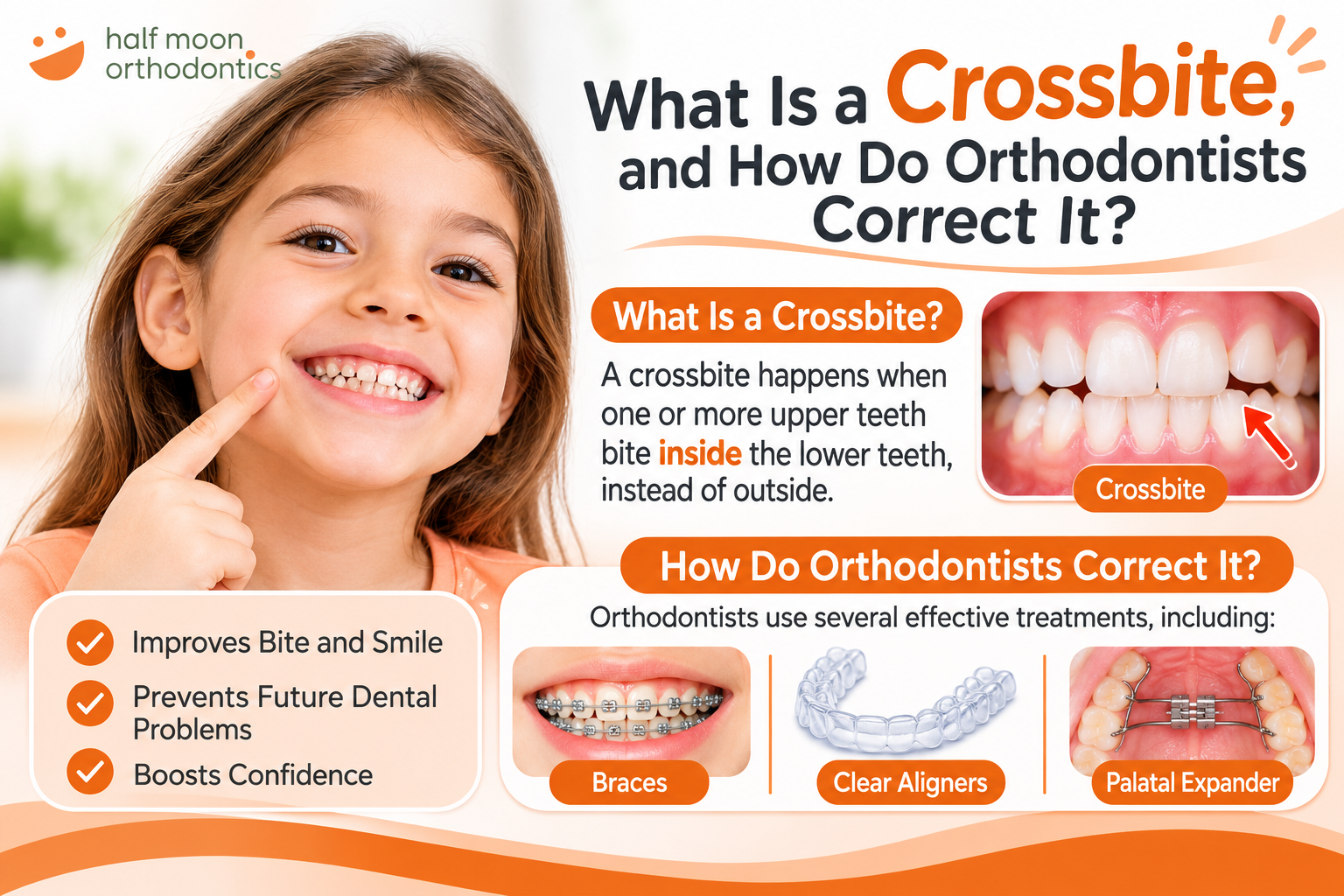
A crossbite is a bite issue in which some upper teeth sit inside or behind lower teeth instead of slightly outside them. Orthodontists can treat it with braces, clear aligners, or palatal expanders. In rare cases, jaw surgery may be needed. Many people might not notice a crossbite at first. As a result, it may go untreated for years. Knowing it early will save you time, discomfort, and more dental work.
This article explains what a crossbite is, the many types, and what causes it. We also explain how it affects tooth wear and chewing, how treatment works, and when you should see an orthodontist. By the end, you will understand your options and what to do next.
What Is a Crossbite?
A crossbite is a misalignment in which some upper teeth fit inside lower teeth when the jaws close. In a healthy bite, the upper teeth are just outside the lower teeth. With a crossbite, the pattern is reversed for one tooth, a few teeth, or the full side. Research shows posterior crossbite affects 8%-22% of children, so it is not uncommon.
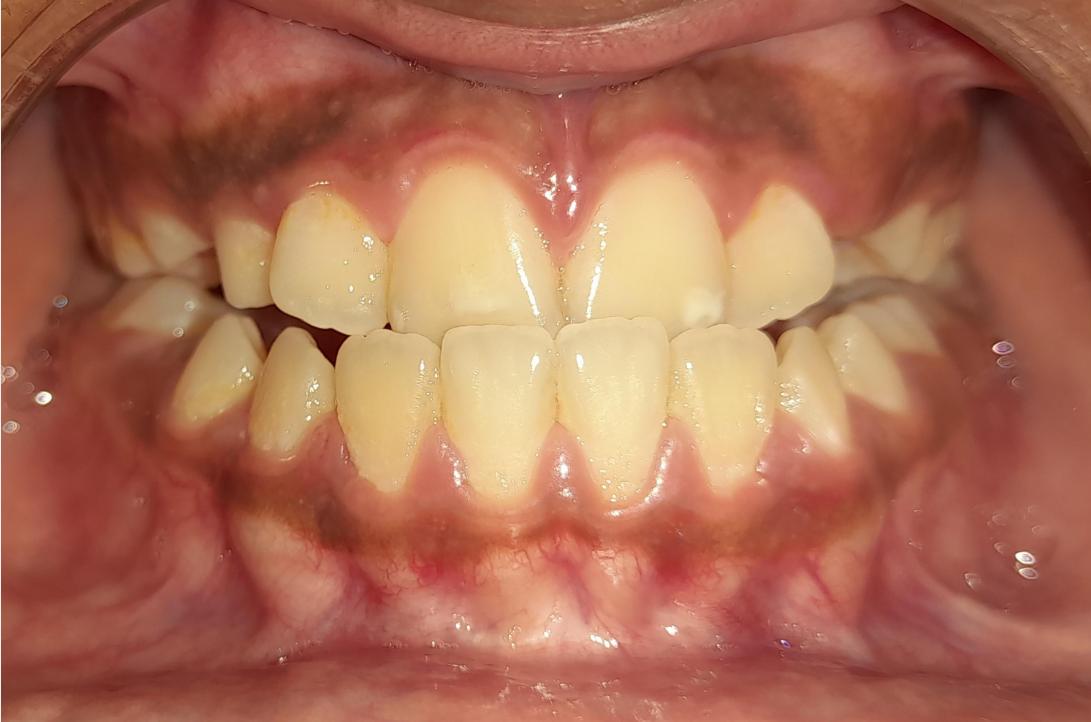
What Are the Different Types of Crossbite?
The two main types of crossbite are anterior and posterior. They depend on which teeth are out of position.
Anterior Crossbite
An anterior crossbite means that one or more upper front teeth are placed behind the lower front teeth. It looks like an underbite; however, it may damage only one or two teeth.
Posterior Crossbite
A posterior crossbite happens when the upper back teeth bite within the lower back teeth, whether on one side or both. It usually occurs when the upper jaw is too narrow. A rarer type is known as a scissor bite. It means that the upper back teeth are fully removed from the lower teeth and do not come into contact.
What Causes a Crossbite?
Crossbite is commonly caused by genetics, jaw growth, or childhood habits. Constant thumb sucking or pacifier use can affect jaw growth. Mouth breathing can narrow the upper jaw over time. Baby teeth that fall out too soon or too late can affect how adult teeth grow. A small upper jaw or a large lower jaw can also cause a skeletal crossbite. This type affects the jawbones as well as the teeth.
How Can You Tell If You Have a Crossbite?
If your upper and lower teeth do not align properly, you may have a crossbite. It may be more visible on the side of your mouth. Here are some common signs you should look for:
- When you close your mouth, your upper teeth bite into your lower teeth.
- Your jaw moves to one side as your teeth touch.
- Chewing feels uneven, or you chew mostly on one side.
- Your teeth might seem worn or chipped, and your jaw may feel sore.
An orthodontist can examine your bite and use X-rays to see if you have a crossbite.
Can a Crossbite Affect Chewing and Tooth Wear?
A crossbite can make biting difficult. It can also cause uneven tooth wear because your teeth do not meet properly. This increases pressure on some teeth, causing them to wear down faster. When you close your mouth, your jaw moves to one side, which can put strain on the joints over time. That is why many orthodontists recommend starting treatment as soon as possible.
How Do Orthodontists Treat a Crossbite?
Orthodontists treat a crossbite by moving the teeth or widening the jaw. Your treatment depends on your age and how severe the crossbite is. It also depends on whether the problem is with your teeth or jaw bones. The table below shows the comparison.
Method | Best suited for | How it works |
| Palatal expander | Growing children and teens | Widens a narrow upper jaw gradually |
| Braces or clear aligners | Mild to moderate cases, all ages | Moves teeth into proper alignment |
| Crossbite elastics | Mild cases or tooth repositioning | Pulls the upper arch out and lower arch in |
| Removable spring appliance | One front tooth in young children | Pushes the tooth forward with a spring |
| Jaw (orthognathic) surgery | Severe skeletal cases in adults | Realigns the jaw alongside braces |
Braces for Crossbite Correction
Braces help to fix a crossbite by slowly moving each tooth into the proper place. They work well for children, teens, and adults with mild to moderate crossbites. Orthodontists may also use small rubber bands known as crossbite elastics. These help to pull the upper arch outward and the lower arch inward.
Clear Aligners for Suitable Cases
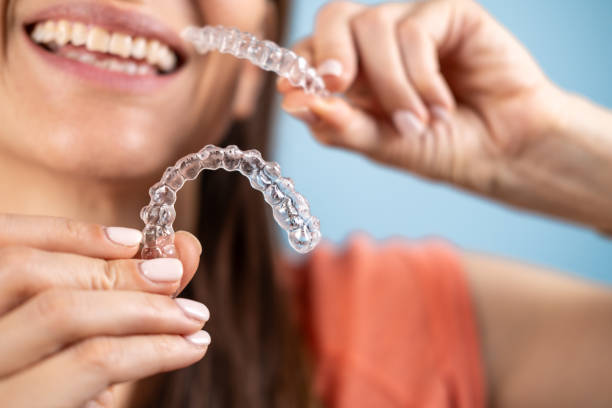
Clear aligners can sometimes treat a crossbite, especially if it is mild. They work well when only tooth position needs to change. You can remove them, and they are hard to see. Many adults and teens enjoy them for this reason. However, severe or skeletal crossbites may require braces or another type of appliance.
Palatal Expanders for Growing Children
Palatal expanders are used to widen a narrow upper jaw in growing children and teens. The device sits on the roof of the mouth and gently presses on the jaw. This slowly widens the upper jaw. After that, braces are often used to complete the treatment. Adults usually need different treatment options. In severe cases, they may require both jaw surgery and braces.
When Should a Crossbite Be Evaluated?
It is best to get a crossbite checked as soon as possible, usually by age 7. The American Association of Orthodontists (AAO) recommends that children have their first orthodontic checkup by age 7. Early treatment can help guide jaw growth. According to the AAO, around one in four orthodontic patients are adults. This means that many people get treatment later in life. If your jaw moves, your teeth wear unevenly, or one tooth bites behind the others, plan an orthodontic visit right away.
Frequently Asked Questions
Can a Crossbite Correct Itself?
A crossbite usually does not fix itself, especially after the permanent teeth come in. Sometimes, a mild crossbite in a young child improves as their baby teeth fall out. However, waiting may let the problem worsen, so it is best to have it checked.
Is Crossbite Treatment Necessary?
Crossbite treatment is not always necessary. However, it can help to avoid tooth wear, chewing issues, and jaw strain. Mild cases with no symptoms may need just regular checkups. Your orthodontist explains the risks of leaving it alone so you can choose.
Can Adults Get Crossbite Treatment?
Adults can also be treated for crossbite. Braces or clear aligners can often help with mild to moderate cases. Because adult jaws have stopped growing, palatal expanders are usually less effective. Severe crossbites caused by jaw bone problems may require surgery along with braces.
Does Fixing a Crossbite Change Your Face?
Treating a crossbite can slightly change your appearance by improving how your jaw and lips sit. When your jaw stops moving to one side, the lower part of your face may look more even. But the change is usually small and depends on what caused the crossbite.
Final Thoughts
A crossbite can affect both the front and back teeth. Genetics, childhood habits, and jaw size can all cause this condition. If not addressed, a crossbite can cause uneven wear on your teeth. It can also make chewing more difficult and put stress on your jaw. The good news is that braces, clear aligners, and expanders can help you treat your crossbite. In severe cases, you may need surgery. So, getting checkups early can make treatment easier.
If you think you or your child may have a crossbite, Half Moon Orthodontics can examine your bite and explain your treatment choices. Schedule your consultation today to begin your journey toward a healthier bite.

Dr. Ronak Mody
Dr. Ronak Mody is committed to providing exceptional orthodontic care for patients of all ages. We use the latest technology to create personalized treatment plans with clear aligners, metal braces, and clear braces — all in a fun, comfortable environment.
Book a Free Consult
Half Moon Orthodontics
Smiles to the Moon and Back!
Quality, affordable orthodontic care for the whole family in Lake Forest, CA.
Book Free Consult
Leave a Reply