
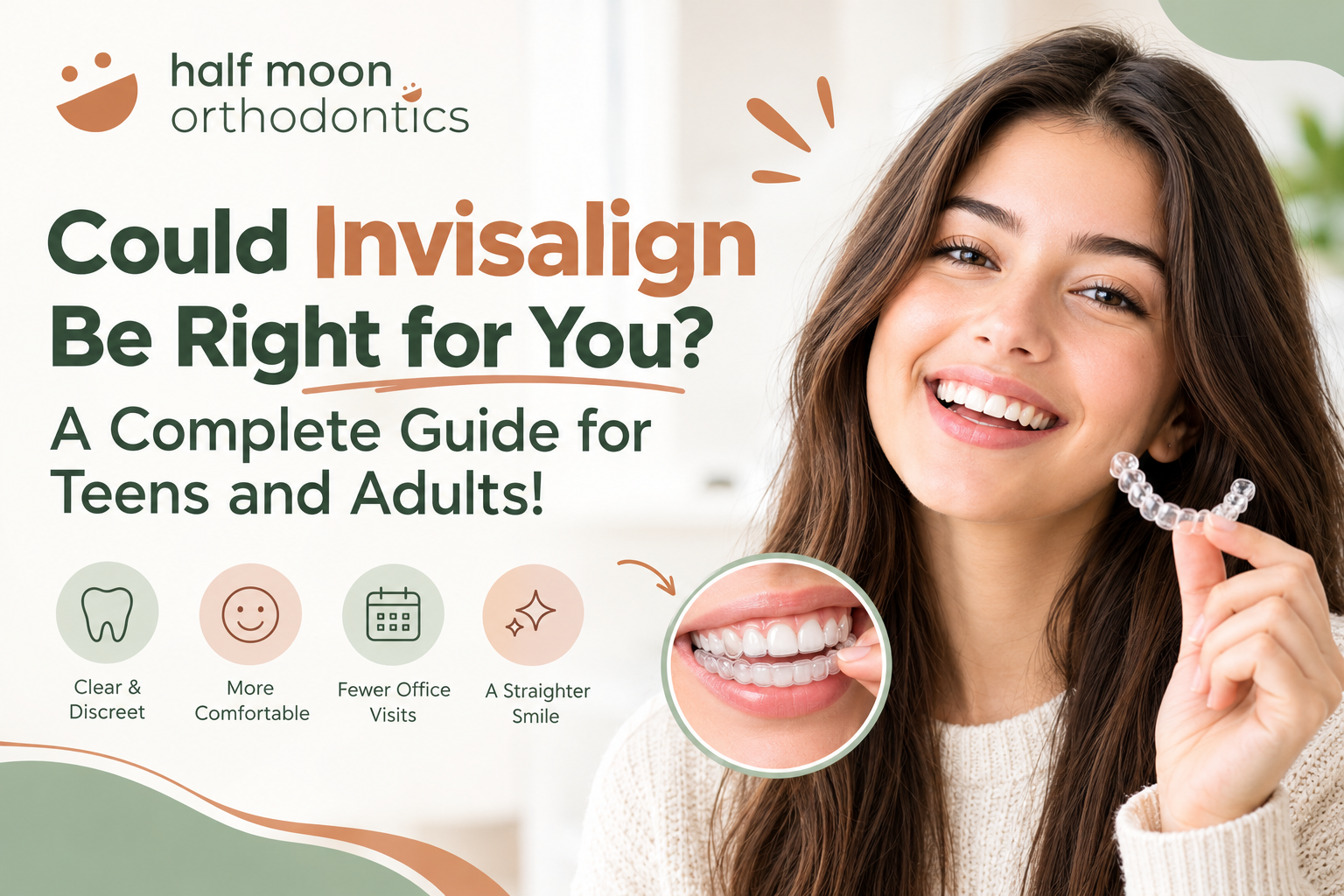
Clear and custom-made, Invisalign can effectively treat crowded teeth, gaps, or mild to moderate bite problems by straightening teeth progressively without metal brackets or wires. Whether Invisalign is a good option depends on the dental issue being treated, the patient’s ability to wear Invisalign 20 to 22 hours per day, and the complexity of the case.
Teens and adults have different reasons for wearing Invisalign and different daily challenges to overcome: school, sports, work meetings, social events, and more. This guide explains who is a good candidate, how age and lifestyle play a role and what to expect throughout the process of treatment.
Could Invisalign Be Right for You?
Most people with mild to moderate crowding, gaps, or bite problems are good candidates for Invisalign because it can move teeth over time without visible metal braces. As of 31 December 2025, Align Technology, which manufactures Invisalign, says more than 22 million people have been treated with the Invisalign system.
What Dental Problems Can Invisalign Treat?
The majority of common orthodontic issues in teens and adults can be treated with Invisalign, including crowded teeth, gaps between teeth, and mild to moderate overbite, underbite or crossbite. Many patients think their case is too complicated for aligners, but it isn’t.
When Might Braces Be a Better Option?
Braces are more effective than Invisalign for serious bite issues, jaw misalignment, and when there is a need for more major rotations of the teeth, as the constant pressure of the fixed brackets cannot be achieved with Invisalign. In these complicated situations, patients can see better results in a shorter time with traditional braces, although the hardware will be more noticeable every day.
Does Your Age Matter for Invisalign?
Many people think a patient’s age matters less than it seems for Invisalign treatment. It can be used by teens and adults well into their senior years. According to the American Association of Orthodontists, the ideal time to schedule an evaluation to detect early orthodontic problems is at approximately age 7, but after that age, once all permanent teeth are in, orthodontics, including Invisalign, can help people at any age.
Is Invisalign a Good Option for Teens?
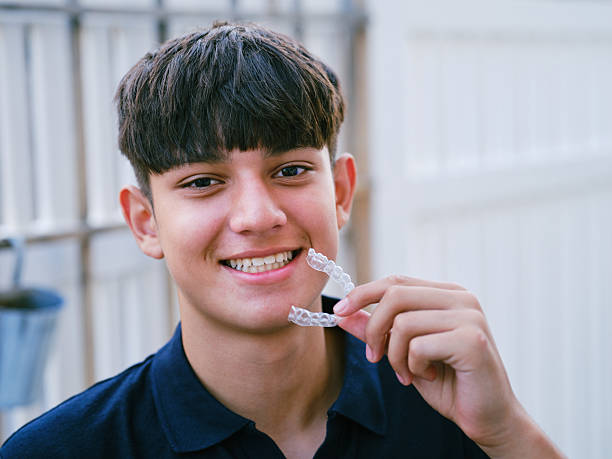
For many teens, Invisalign works well, provided they can make it a daily habit to wear their aligners. This is because the treatment depends more on daily discipline and consistent wear than on the technology itself. Features such as eruption tabs for growing molars and compliance indicators that fade as they wear allow teens and parents to know where they are during the process.
Can Teens Keep Up With Daily Aligner Wear?
Once teens understand that the more they wear the aligners, the better the results, most can keep up with daily use, typically 20 to 22 hours a day. The compliance indicators in teen aligners fade over time when they are worn correctly, allowing the parent or orthodontist to see that the trays are being worn as intended.
What About School, Sports, and Social Activities?
The trays are nearly invisible, helping you feel confident in class or at events, and they’re easy to remove for contact sports or meals, making Invisalign ideal for school, sports, and social schedules. One of the main reasons teens and parents choose aligners over braces during their active, image-conscious years is the flexibility they offer.
How Do Parents Know If Their Teen Is Ready?
The signs of readiness can be observed by how well their teen does certain daily tasks, such as remembering their retainers, managing their homework, or keeping their personal items without constant reminders. If a teenager shows this consistency, they’re likely a good candidate for Invisalign’s discipline.
Is Invisalign a Good Option for Adults?
Beyond being easy to incorporate into an adult’s schedule and social life, Invisalign is an excellent choice for adults who want to fix the same crowding, gaps, and mild bite problems it can fix in teens. People choose Invisalign, in part, because it has no food restrictions and avoids the appearance of metal braces.
Can You Get Invisalign as an Adult?
While Invisalign isn’t suitable for children, there is no age limit for adults, as long as their teeth and gums are healthy enough to move. Usually, X-rays and a dental examination are the only tests required to determine candidacy.
How Do Aligners Fit Into Work and Daily Life?
Aligners fit into work and daily life, don’t distract during meetings or social situations, and are easy to remove for meals or presentations. Brushing and flossing are also easier with clear aligners than with traditional braces, since there are no brackets or wires to navigate.
What If Your Teeth Shifted After Previous Braces?
People mostly use Invisalign to deal with minor shifting that occurs years after wearing braces as a teenager and getting rid of their retainer. This type of relapse happens very often, and an aligner can correct the problem faster and more discreetly than having to go through braces again.
Feature |
Teens |
Adults |
| Typical Timeline | About 12 to 24 months | About 12 to 18 months |
| Key Features | Eruption tabs for growing molars, compliance indicators to track wear | Subtle appearance for work and social settings, no dietary restrictions |
| Daily Wear Time | 20 to 22 hours per day | 20 to 22 hours per day |
| Best For | Growing mouths, balancing school, sports, and social activities | Professional settings, correcting relapse after previous braces |
Frequently Asked Questions
Is Invisalign suitable for everyone?
Invisalign suits mild to moderate orthodontic issues, but severe bite problems or significant jaw misalignment may require traditional braces. An orthodontist consultation will confirm your candidacy.
Is Invisalign good for teenagers?
Invisalign works well for teens who commit to wearing the aligners consistently, and teen-specific features like compliance indicators help track daily wear. Success depends on discipline, not age.
Is Invisalign effective for adults?
Invisalign is highly recommended for adults having crowding, gaps, or minor bite issues. It also fits well into professional and social routines. Many adults also use it to correct shifting occurring after previous orthodontic treatment.
What age is best to get Invisalign?
No single age is best for Invisalign; it works for teenagers with a full set of permanent teeth and adults of any age. The right time is based on dental readiness and personal commitment rather than a specific digit.
Can Invisalign fix crowded teeth?
Invisalign effectively treats mild to moderate tooth crowding by slowly moving teeth into proper alignment with a set of custom aligners. More severe crowding cases need extra attachments or a longer treatment duration.
Can Invisalign fix gaps between teeth?
Yes, Invisalign can close gaps between teeth by gradually guiding them together with a series of custom-fitted trays. Most gap cases show noticeable improvement within a few months of consistent wear.
Can Invisalign correct an overbite or underbite?
Invisalign can correct mild to moderate overbites and underbites, but more serious cases may need additional tools or a referral to traditional braces. An orthodontist can determine which one fits your specific bite pattern.
Do I need attachments with Invisalign?
Some cases require small, tooth-colored attachments bonded to certain teeth to grip the aligners and move them more precisely. Not every patient needs them, and your orthodontist will tell you this during your treatment planning.
Final Thoughts
Invisalign offers a flexible, discreet option for straighter teeth for teens and adults, as long as your case involves mild to moderate crowding, gaps, or bite issues and you’re willing to wear them consistently every day. For teens, it’s built around growing mouths and busy school schedules. For adults, it fits easily into work and social life without getting in the way.
Half Moon Orthodontics can help you decide whether Invisalign is the right fit for your smile or whether traditional braces would give you better results. Schedule a consultation with Half Moon Orthodontics today to find out which option is best for you or your teen.

Dr. Ronak Mody
Dr. Ronak Mody is committed to providing exceptional orthodontic care for patients of all ages. We use the latest technology to create personalized treatment plans with clear aligners, metal braces, and clear braces — all in a fun, comfortable environment.
Book a Free Consult
Half Moon Orthodontics
Smiles to the Moon and Back!
Quality, affordable orthodontic care for the whole family in Lake Forest, CA.
Book Free Consult
Leave a Reply